
Palimbang, Sultan Kudarat: History, Medol Island, Beaches and Travel Guide
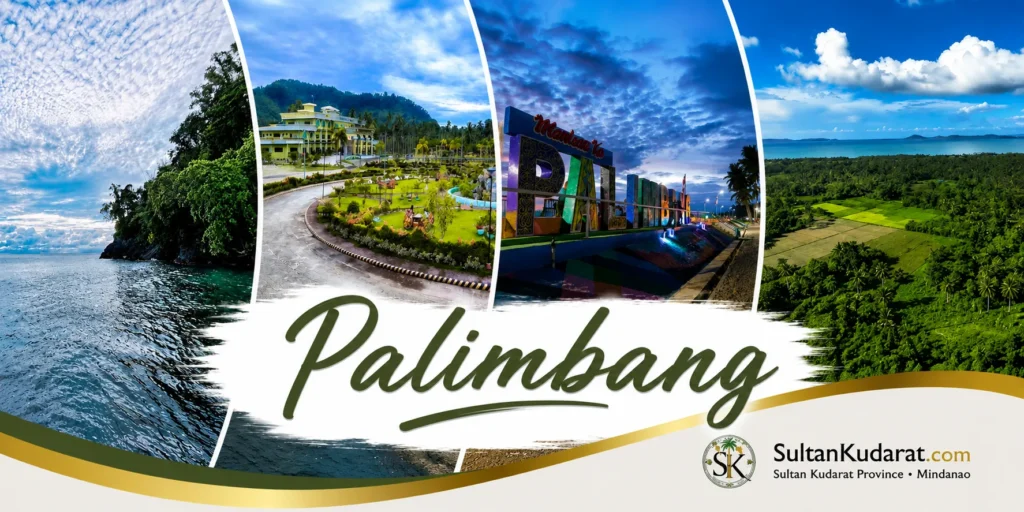
Palimbang is a coastal, first-class municipality in the province of Sultan Kudarat, within the SOCCSKSARGEN Region (Region XII) of the Philippines. Located along the Celebes Sea, the municipality includes coastal communities, agricultural areas, rivers, forests, hills, and mountainous interior landscapes.
Fishing, agriculture, local commerce, transportation, and public services support the municipality’s economy. Palimbang is also developing its tourism sector through destinations such as Medol Island, sandy beaches, floating cottages, and other coastal environments.
The municipality’s identity reflects the histories and traditions of its Maguindanaon, Iranun, Manobo, Hiligaynon, Cebuano, and other communities.
Quick Facts About Palimbang
| Information | Details |
|---|---|
| Province | Sultan Kudarat |
| Region | SOCCSKSARGEN (Region XII) |
| Classification | First-Class Municipality |
| Created | August 14, 1959 |
| Legal Basis | Executive Order No. 350, s. 1959 |
| Municipalities From Which It Was Created | Lebak and Kiamba, former Province of Cotabato |
| Seat of Government | Palimbang |
| Barangays | 40 |
| Population | 83,633 (2024 POPCEN) |
| ZIP Code | 9809 |
| Time Zone | Philippine Standard Time (UTC+8) |
| Common Languages | Maguindanaon, Hiligaynon, Cebuano, Manobo, Filipino and English |
Why Visit Palimbang?
Palimbang offers coastal and rural experiences centered on Medol Island, sandy beaches, fishing communities, local products, and mountainous landscapes. Because tourism facilities and transportation may be limited in some areas, visitors should verify access, boat arrangements, weather, fees, and local safety conditions before traveling.
Visitors may be interested in:
- Medol Island
- Sandy beaches and floating cottages
- Coastal and fishing communities
- Mountain and rural landscapes
- Local products and Maguindanaon delicacies
- Kalilang sa Biwang
- Community history and cultural heritage
History of Palimbang
The area that became Palimbang has longstanding connections with Maguindanaon, Iranun, Manobo, and other communities. Fishing, farming, settlement, and trade contributed to the development of communities along its coast, rivers, and interior areas.
Palimbang was officially created on August 14, 1959, through Executive Order No. 350, signed by President Carlos P. Garcia. The order separated numerous barrios from the municipalities of Lebak and Kiamba, then part of the undivided Province of Cotabato, and organized them into the independent Municipality of Palimbang.
The executive order designated the Barrio of Palimbang as the municipal seat of government.
On November 22, 1973, Palimbang became part of the newly created Province of Sultan Kudarat under Presidential Decree No. 341.
Palimbang’s later development has been shaped by agriculture, fishing, migration, public infrastructure, cultural diversity, and efforts to strengthen peace and local livelihoods.
Palimbang–Tacbil Historical Memory
Palimbang is also associated with a painful period in Philippine history. During martial law, residents of Malisbong and surrounding communities suffered grave human-rights violations in an event remembered as the Palimbang–Tacbil or Malisbong massacre.
The Commission on Human Rights of the Philippines formally recognized the Palimbang–Tacbil massacre and its annual commemoration every September 24 through CHR Resolution (V) No. AM2019-183.
This history should be presented respectfully as part of the community’s remembrance of victims and its continuing commitment to human dignity, peace, and justice.
Geography and Location
Palimbang is located on the western coast of Sultan Kudarat, facing the Celebes Sea. Its terrain includes coastal communities, beaches, rivers, agricultural areas, forests, hills, and mountainous interior barangays.
The municipality is situated south of Kalamansig and extends toward the boundary areas of Sarangani and South Cotabato. Its coastal and interior geography influences transportation, livelihoods, agriculture, fishing, and access to public services.
Travel between Palimbang and central Sultan Kudarat involves overland routes through rural and mountainous terrain.
Barangays
According to the Philippine Statistics Authority, Palimbang is politically divided into 40 barangays:
Akol, Badiangon, Baliango, Baranayan, Barongis, Batang-baglas, Butril, Domolol, Kabuling, Kalibuhan, Kanipaan, Kisek, Kidayan, Kiponget, Kulong-kulong, Kraan, Langali, Libua, Lumitan, Maganao, Maguid, Malatuneng, Malisbong, Milbuk, Molon, Namat Masla, Napnapon, Poblacion, San Roque, Colobe, Tibuhol, Wal, Bambanen, Lopoken, Mina, Medol, Wasag, Balwan, Ligao, and Datu Maguiales.
Climate
Palimbang has a tropical maritime climate, with generally warm and humid conditions. Rainfall varies by season and from year to year and may affect farming, fishing, road conditions, river levels, and coastal travel.
Coastal and riverside communities may experience risks from heavy rainfall, flooding, rough seas, strong winds, and other weather disturbances. Visitors should check forecasts and advisories from PAGASA, the Philippine Coast Guard, and local disaster-management authorities.
Economy
Palimbang’s economy is supported by fishing, agriculture, local trade, transportation, construction, public services, and small enterprises. Coastal communities engage in fishing and related trade, while interior communities participate in crop production and other agricultural activities.
Tourism is a developing sector, particularly around Medol Island and Palimbang’s beaches. It should not yet be presented as one of the municipality’s dominant industries without current economic statistics.
Local products promoted through regional trade and tourism activities have included banana chips, fish sauce, and Maguindanaon delicacies.
The local-product information is supported by the Philippine Information Agency’s Palimbang feature.
Fisheries and Agriculture
Fishing and farming are important livelihood activities in Palimbang. Municipal fishers operate in coastal waters, while residents also participate in fish trading, transportation, and other related services.
Agricultural activities include the cultivation of rice, corn, coconut, banana, vegetables, and other crops, although the types and production volumes vary by location, season, and market conditions. Poultry and livestock raising may also contribute to household and commercial livelihoods.
Fishing and farming support related activities such as local trading, food preparation, agricultural supplies, transportation, and small-scale processing.
Education
Palimbang is served by public elementary and secondary schools across its barangays. Alternative Learning System programs, private education, and technical-vocational training may also be available, but current institutions and courses should be verified directly.
Sultan Kudarat State University operates a Palimbang Campus. Current university listings include the Bachelor of Elementary Education and Bachelor of Science in Agribusiness.
Prospective students should verify current admission requirements, program availability, and enrollment schedules directly with the university.
Healthcare
Primary healthcare is provided through the Rural Health Unit, barangay health stations, and community health programs. Services may include basic consultations, maternal and child care, vaccination, health education, and disease-prevention programs.
The availability of doctors, medicines, laboratory testing, dental care, ambulances, and emergency services should be confirmed directly with the appropriate facility.
Patients requiring advanced hospital or specialist care may need referral to another healthcare facility. Referral destinations depend on the patient’s condition, available transportation, road conditions, and the capacity of receiving hospitals.
Business and Commerce
Palimbang’s local commerce serves its coastal and interior communities. Common establishments and services may include:
- Small tourism-related enterprises
- Public-market vendors
- Fish and agricultural traders
- Grocery and general merchandise stores
- Agricultural and fishing supplies
- Hardware stores
- Restaurants and food vendors
- Pharmacies and personal services
- Cooperatives and payment services
Tourist Attractions and Coastal Experiences
Palimbang is developing its tourism sector around Medol Island, beaches, floating cottages, coastal communities, local products, and mountain scenery. Facilities and access conditions vary, so visitors should coordinate with the Municipal Tourism Office or local barangay officials.
Medol Island
Located off Barangay Medol, Medol Island is one of Palimbang’s best-documented tourist destinations. Visitors are transported to the island by local boat operators, providing additional income for some fishing families.
Reported activities include coastal sightseeing, swimming in designated areas, and line fishing. Visitors should confirm boat availability, fares, sea conditions, life-jacket requirements, fees, and current safety rules before traveling.
The island also has rock formations, but it should not be advertised as a diving site unless it has been professionally assessed and officially approved for diving.
Beaches and Floating Cottages
Palimbang has sandy coastal areas and floating cottages promoted by local tourism stakeholders. Beach conditions, access rules, currents, facilities, and fees vary by location.
Visitors should use only authorized boats and should not assume that every coastal area is safe for swimming or camping.
Barongis Pasalubong Center
The Barongis Pasalubong Center promotes locally made food and souvenir products. Availability may include banana chips, fish sauce, and Maguindanaon delicacies, although products and operating hours may change.
Mountain and Rural Landscapes
Palimbang’s interior includes mountainous and agricultural landscapes. Travel to remote areas should be coordinated with local officials, guides, communities, or landowners.
Culture and Festivals
Palimbang’s cultural identity reflects the traditions and histories of its Maguindanaon, Iranun, Manobo, Hiligaynon, Cebuano, Muslim, Christian, Indigenous, and other communities.
Kalilang sa Biwang
Kalilang sa Biwang is associated with Palimbang’s municipal celebration and cultural identity. The word kalilang is connected with celebration or festivity in Maguindanaon cultural usage.
Activities may include cultural presentations, civic programs, sports competitions, trade displays, community gatherings, and other public events. Dates and programs can change, so visitors should consult current announcements from the Municipal Government of Palimbang before traveling.
Transportation
Palimbang is accessible by road, but travel can involve long routes through rural and mountainous areas. Transportation availability may include buses, vans, jeepneys, tricycles, motorcycles, and private vehicles, depending on the route.
Local boats may serve selected coastal communities and tourist destinations such as Medol Island. Passengers should use authorized operators, wear life jackets, and check sea and weather conditions.
Travelers from Isulan, Tacurong City, Koronadal City, or General Santos City should verify current routes, terminals, transfer points, fares, and departure times before traveling.
Government Services
The Municipal Government of Palimbang provides essential public services through various local offices.
Municipal offices and public-safety services may include:
- Office of the Municipal Mayor
- Municipal Agriculture Office
- Municipal Health Office
- Municipal Civil Registrar
- Business Permits and Licensing Office
- Municipal Social Welfare and Development Office
- Municipal Tourism Office
- Municipal Disaster Risk Reduction and Management Office
- Philippine National Police
- Bureau of Fire Protection
These agencies support sustainable fisheries, agricultural development, tourism, environmental protection, and public welfare.
Safety and Responsible Travel
Palimbang includes coastal, riverside, mountainous, and remote communities. Visitors should:
- Check weather, flood, earthquake, and sea-condition advisories
- Use authorized boat operators
- Wear a life jacket on boat journeys
- Avoid sea travel during rough weather
- Confirm road conditions before visiting remote barangays
- Coordinate with local officials before entering unfamiliar areas
- Obtain permission before entering farms, private property, or culturally significant sites
- Respect fishing equipment and working coastal areas
- Avoid collecting coral, wildlife, shells, or protected plants
- Dispose of waste responsibly
Mobile-phone coverage, transportation, and emergency-response times may vary in remote areas. Visitors should tell someone their planned route and expected return time.
Investment Considerations
Palimbang may offer business opportunities connected with fisheries, agriculture, food processing, local trade, transportation, community services, and carefully planned tourism.
Prospective investors should evaluate market demand, land ownership, zoning, road and port access, electricity, water, communications, environmental restrictions, coastal hazards, flood exposure, waste management, permits, and supply chains.
Projects involving shorelines, islands, mangroves, aquaculture, forests, or culturally significant communities may require environmental permits and community consultation.
Frequently Asked Questions
Where is Palimbang located?
Palimbang is a coastal municipality on the western side of Sultan Kudarat, within the SOCCSKSARGEN Region. It faces the Celebes Sea.
What is Palimbang known for?
Palimbang is known for Medol Island, sandy beaches, fishing and agricultural communities, diverse cultural traditions, and Kalilang sa Biwang.
What are the main industries in Palimbang?
Fishing, agriculture, local trade, transportation, public services, construction, and small enterprises contribute to Palimbang’s economy. Tourism is a developing sector.
What languages are spoken in Palimbang?
Maguindanaon, Hiligaynon, Cebuano, Manobo, Filipino, and English are among the languages spoken or understood in Palimbang. Language use varies among barangays and households.
Is Palimbang good for tourism?
Palimbang is an emerging coastal destination with Medol Island, beaches, floating cottages, local products, and mountain scenery. Visitors should verify access, transportation, weather, fees, facilities, and safety conditions before traveling.
Is Palimbang good for investment?
Palimbang may offer opportunities in fisheries, agriculture, processing, local trade, transportation, services, and responsible tourism. Each proposal requires a feasibility study and verification of infrastructure, permits, environmental requirements, hazards, and market demand.
Discover Palimbang
Palimbang is a coastal municipality shaped by the Celebes Sea, fishing and agricultural livelihoods, culturally diverse communities, and a significant local history. Destinations such as Medol Island, sandy beaches, floating cottages, and local-product centers demonstrate its developing tourism potential.
Visitors should plan carefully, respect local communities and historical memory, verify current conditions, and follow marine, environmental, and public-safety regulations.