
Lambayong, Sultan Kudarat: History, Agriculture, Festivals and Travel Guide
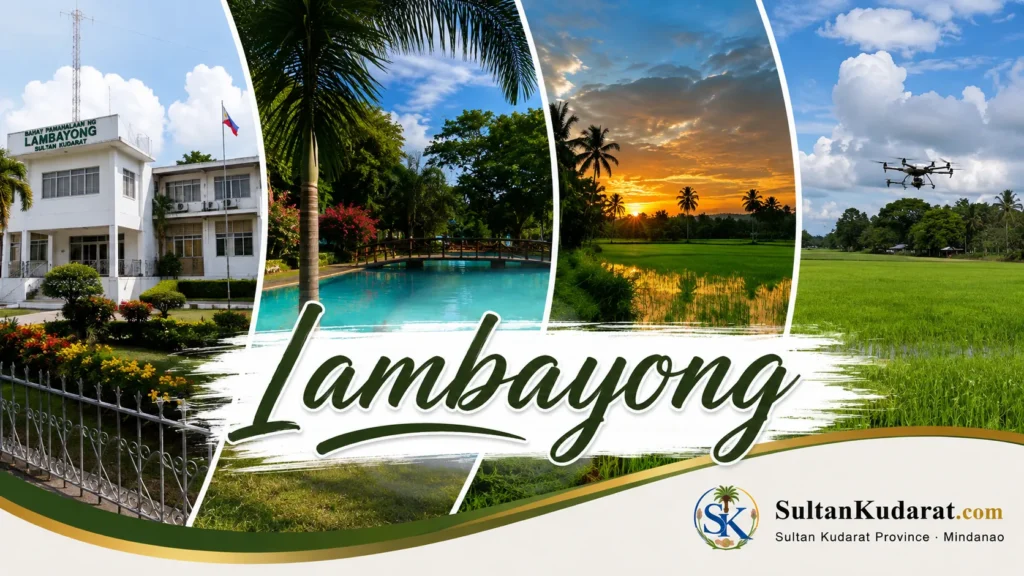
Lambayong is a landlocked, first-class municipality in the province of Sultan Kudarat, within the SOCCSKSARGEN Region (Region XII) of the Philippines. Known for its extensive farmlands and irrigation-supported agriculture, the municipality contributes significantly to the province’s production of rice and other agricultural commodities.
Lambayong offers visitors a view of rural life, farming communities, local markets, and multicultural traditions. It is connected by road to nearby commercial and government centers, including Tacurong City and Isulan.
Quick Facts About Lambayong
| Information | Details |
|---|---|
| Province | Sultan Kudarat |
| Region | SOCCSKSARGEN (Region XII) |
| Classification | First-Class Municipality |
| Municipality Created | November 22, 1973 |
| Original Municipal Name | Mariano Marcos |
| Renamed Lambayong | October 12, 1988 |
| Barangays | 26 |
| Population | 81,288 (2024 POPCEN) |
| ZIP Code | 9802 |
| Time Zone | Philippine Standard Time (UTC+8) |
| Common Languages | Ilocano, Hiligaynon, Maguindanaon, Filipino, Cebuano and English |
Why Visit Lambayong?
Lambayong offers a peaceful countryside experience characterized by rice fields, farming communities, local markets, and agricultural landscapes. Rather than being a conventional resort destination, it gives visitors an opportunity to observe the municipality’s rural economy and multicultural community life.
Visitors appreciate Lambayong for its:
- Expansive rice fields
- Agricultural landscapes
- Peaceful countryside
- Local markets and farm products
- Multicultural traditions
- Timpuyog Festival
- Agribusiness activities
History of Lambayong
The present Municipality of Lambayong was formally created as the Municipality of Mariano Marcos on November 22, 1973, through Presidential Decree No. 339. The decree separated several barrios from the Municipality of Sultan sa Barongis, Maguindanao, and constituted them as an independent municipality within the newly established Province of Sultan Kudarat. The seat of government was designated in Poblacion.
On October 12, 1988, Republic Act No. 6676 officially changed the municipality’s name from Mariano Marcos to Lambayong.
Local accounts associate the name Lambayong with a flowering creeping plant traditionally found in wet areas. However, Republic Act No. 6676 itself does not explain the origin or meaning of the name.
Agriculture, settlement, irrigation development, and the contributions of the municipality’s culturally diverse communities have shaped Lambayong’s growth.
The legal creation is confirmed by Presidential Decree No. 339.
Geography and Location
Lambayong is a landlocked municipality situated in the generally low-lying agricultural area of northeastern Sultan Kudarat. Much of its landscape consists of plains used for irrigated rice cultivation and other agricultural activities.
The municipality is connected by local and provincial roads to nearby communities and commercial centers, including Tacurong City, Isulan, and President Quirino.
Barangays
Lambayong is politically divided into 26 barangays:
Caridad (Cuyapon), Didtaras, Gansing (Bilumen), Kabulakan, Kapingkong, Katitisan, Lagao, Lilit, Madanding, Maligaya, Mamali, Matiompong, Midtapok, New Cebu, Palumbi, Pidtiguian, Pimbalayan, Pinguiaman, Poblacion, Sadsalan, Seneben, Sigayan, Tambak Mopak, Tinumigues, Tumiao (Tinaga), and Udtong.
Climate
Lambayong has a tropical climate, with generally warm and humid conditions throughout the year. Rainfall and irrigation support agricultural production, although weather conditions may affect planting, harvesting, transportation, and low-lying communities.
Visitors should check the latest weather forecast and local travel advisories, especially during periods of heavy rainfall.
Economy
Lambayong’s economy is strongly connected to agriculture and agricultural support services. Farming generates activity in local trade, transportation, equipment services, farm supplies, rice milling, food distribution, and retail businesses.
Its economic activities also benefit from access to the nearby commercial centers of Tacurong City and Isulan.
Agriculture
Rice cultivation is a defining feature of Lambayong’s agricultural landscape. Irrigation systems help support farming across its low-lying plains. Farmers also produce other crops and raise poultry and livestock, although production levels can vary from year to year.
Agriculture supports related activities such as rice milling, agricultural trading, farm-input retail, equipment services, storage, and transportation.
Agricultural products reported or commonly grown in the area include:
- Rice
- Corn
- Coconut
- Banana
- Cassava
- Vegetables
- Mango
- Poultry
- Livestock
Rice remains the municipality’s flagship crop, with government agencies, farmers’ organizations, and agricultural programs promote mechanization, improved seeds, training, and other production technologies.
Agriculture also supports rice mills, trading centers, farm supply businesses, and transportation services throughout the municipality.
Education
Lambayong is served by public elementary schools and public secondary schools located across its barangays. Alternative Learning System (ALS) programs may also provide learning opportunities for qualified out-of-school youth and adults.
Students seeking college, university, or specialized technical-vocational education may attend institutions in nearby centers such as Tacurong City and Isulan. Other programs may also be available in Koronadal City and neighboring municipalities.
The availability of private schools, ALS classes, and technical-vocational programs may change. Students and parents should verify current schools, courses, admission requirements, and schedules directly with the institution or the appropriate education agency.
Healthcare
Primary healthcare is provided through the Rural Health Unit, barangay health stations, and community health programs. Services may include maternal and child care, vaccination, health education, basic consultations, and disease-prevention programs.
Patients requiring hospital treatment, specialist care, or advanced diagnostic services may be referred to healthcare facilities in Tacurong City, Isulan, or other regional centers.
Travelers should verify operating hours and emergency availability directly with the appropriate facility.
Business and Commerce
Lambayong’s commercial activity continues to expand alongside its agricultural economy.
Common types of establishments and services include:
- Public market
- Rice mills
- Agricultural supply stores
- Hardware stores
- Grocery stores
- Restaurants
- Pharmacies
- Cooperatives
- Financial or payment services
- Service centers
Local commerce primarily supports farming communities while also serving travelers passing through the municipality.
Places and Local Experiences
Lambayong is primarily an agricultural municipality, so its visitor experience focuses more on countryside scenery and community life than on established commercial tourist destinations.
Agricultural Countryside
Lambayong’s rice fields and farming landscapes can provide scenic countryside views, particularly during planting and harvest periods. Visitors should remain on public roads and obtain permission before entering privately owned farms.
Municipal Plaza and Public Spaces
Public spaces in and around the town center serve as venues for civic programs, recreation, festivals, and community gatherings. Access may change during official events or maintenance.
Lambayong Public Market
The public market provides an opportunity to see local commerce and purchase available produce and everyday goods. Product selection varies according to season and supply.
Agricultural and Irrigation Landscapes
Irrigation facilities are essential working infrastructure rather than formal recreational attractions. Visitors should observe warning signs, avoid restricted areas, and never swim in irrigation canals.
Culture and Festivals
Culture and Festivals
Lambayong’s community reflects the traditions of Ilocano, Maguindanaon, Hiligaynon, Cebuano, Indigenous, and other residents who have contributed to the municipality’s development.
Timpuyog Festival
The Timpuyog Festival is Lambayong’s municipal celebration associated with community unity and the municipality’s founding anniversary activities. The word timpuyog is commonly described as an Ilocano term connected with gathering, unity, and working together.
Festival programs may feature street dancing, cultural presentations, agricultural or trade fairs, sports activities, concerts, and community competitions. Dates and activities may change each year, so visitors should consult announcements from the Municipal Government of Lambayong before traveling.
A 2023 report connects the festival with Lambayong’s anniversary celebration, but annual dates should still be verified. Timpuyog Festival report
Transportation
Lambayong is accessible by road from nearby communities and urban centers. Depending on the route and current availability, local transportation may include tricycles, jeepneys, vans, buses, and private vehicles.
Some travelers may need to transfer in Tacurong City or Isulan before continuing to particular barangays. Schedules and routes can change, so visitors should confirm arrangements locally.
Safety and Responsible Travel
Some low-lying agricultural communities may be affected by flooding after prolonged or intense rainfall. Before traveling, visitors should check weather forecasts and advisories from local disaster-management authorities.
Visitors should also:
- Dispose of waste responsibly
- Ask permission before entering farms or private property
- Avoid swimming or playing in irrigation canals
- Follow warning signs near waterways and agricultural equipment
- Avoid blocking farm-to-market roads
- Respect local customs, religious practices, and community events
Government Services
The Municipal Government of Lambayong delivers essential services through various local offices.
Key government offices include:
- Municipal Hall
- Municipal Agriculture Office
- Municipal Health Office
- Civil Registry Office
- Business Permit and Licensing Office
- Municipal Social Welfare and Development Office
- Philippine National Police
- Bureau of Fire Protection
- Disaster Risk Reduction and Management Office
These agencies support agricultural development, public safety, healthcare, education, and local governance.
Investment Opportunities
Lambayong may offer opportunities in sectors connected with its agricultural economy, including crop processing, storage, agricultural logistics, farm equipment and services, food production, and agricultural retail.
Investment decisions should be based on a proper assessment of land-use regulations, infrastructure, market demand, environmental requirements, flood exposure, utilities, permits, and supply chains. Prospective investors should consult the Municipal Government and appropriate national agencies before committing funds.
Frequently Asked Questions
Where is Lambayong located?
Lambayong is a landlocked municipality in Sultan Kudarat, within the SOCCSKSARGEN Region (Region XII) of the Philippines.
What is Lambayong known for?
Lambayong is known for its extensive rice fields, irrigation-supported agriculture, farming communities, and Timpuyog Festival.
Why was Mariano Marcos renamed Lambayong?
The Municipality of Mariano Marcos was officially renamed Lambayong on October 12, 1988, through Republic Act No. 6676. The law formally changed the municipal name but does not state the detailed reason or etymology behind the change.
What are the major crops grown in Lambayong?
Rice is the municipality’s principal and most visible agricultural crop. Corn, coconut, vegetables, fruits, and other agricultural products may also be grown, depending on location, season, and market conditions.
What languages are spoken in Lambayong?
Ilocano, Hiligaynon, Maguindanaon, Filipino, Cebuano, and English are spoken or understood in the municipality, although language use differs among households and communities.
Is Lambayong good for investment?
Lambayong may provide opportunities in agribusiness and agricultural support industries. However, investors should conduct a feasibility study and verify land use, permits, infrastructure, flood exposure, utilities, and market conditions.
Discover Lambayong
Lambayong is an important agricultural municipality shaped by fertile plains, irrigation-supported farming, multicultural communities, and local traditions. Visitors can experience its countryside scenery, community markets, agricultural way of life, and the celebration of unity represented by the Timpuyog Festival. Travelers are encouraged to plan responsibly, respect working farms and private property, and verify local conditions before visiting.