Senator Ninoy Aquino, Sultan Kudarat: History, Lagbasan Cave, Coffee and Travel Guide
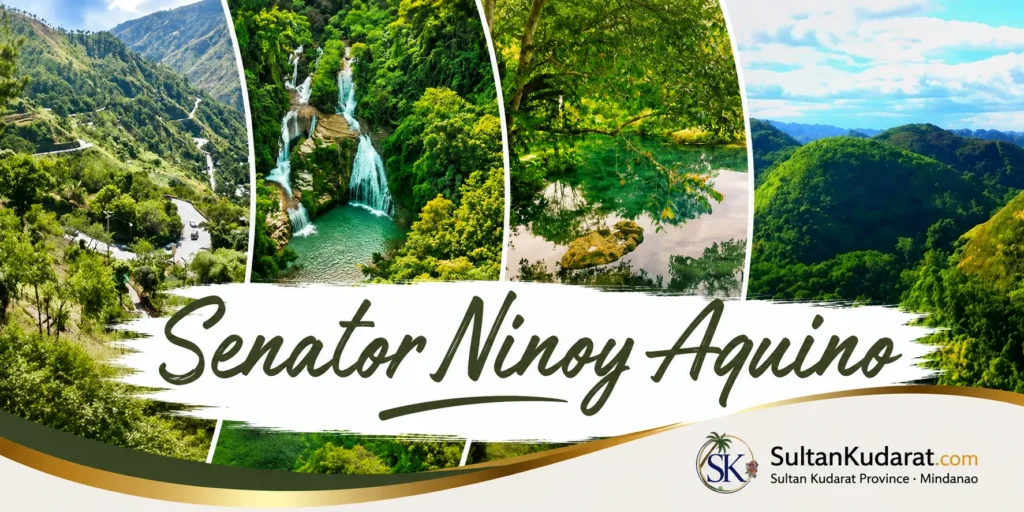
Senator Ninoy Aquino, commonly abbreviated as SNA, is a landlocked, first-class municipality in the province of Sultan Kudarat, within the SOCCSKSARGEN Region (Region XII) of the Philippines. The municipality lies within the mountainous western portion of the province and includes Kulaman Valley, forests, rivers, caves, agricultural areas, and upland communities.
Senator Ninoy Aquino is home to Dulangan Manobo communities and residents from other ethnolinguistic backgrounds. Agriculture, especially coffee farming and other crop production, contributes to the local economy. The municipality also promotes nature-based tourism through destinations such as Lagbasan Cave and experiences connected with its forest, mountain, and coffee-growing landscapes.
The municipality was named after former senator Benigno “Ninoy” Aquino Jr.
Quick Facts About Senator Ninoy Aquino
| Information | Details |
|---|---|
| Province | Sultan Kudarat |
| Region | SOCCSKSARGEN (Region XII) |
| Classification | First-Class Municipality |
| Created | February 17, 1989 |
| Legal Basis | Republic Act No. 6712 |
| Created From Parts Of | Kalamansig and Bagumbayan |
| Seat of Government | Barangay Kulaman |
| Named After | Senator Benigno “Ninoy” Aquino Jr. |
| Barangays | 20 |
| Population | 48,003 (2024 POPCEN) |
| ZIP Code | 9811 |
| Time Zone | Philippine Standard Time (UTC+8) |
| Common Languages | Dulangan Manobo, Hiligaynon, Filipino, Maguindanaon, Cebuano and English |
Why Visit Senator Ninoy Aquino?
Senator Ninoy Aquino offers developing nature- and agriculture-based experiences centered on Kulaman Valley, Lagbasan Cave, forests, mountain landscapes, waterfalls, and coffee-growing communities.
Some destinations are remote and may require local coordination, guides, appropriate equipment, and favorable weather. Visitors should verify access and safety requirements before traveling.
Visitors may be interested in:
- Coffee Festival
- Lagbasan Cave
- Kulaman Valley
- Coffee farms and local coffee
- Kape Mo’To tourism circuit
- Mountain and forest scenery
- Dulangan Manobo cultural heritage
- Sulok Festival
History of Senator Ninoy Aquino
The area that now comprises Senator Ninoy Aquino has longstanding connections with Dulangan Manobo communities and other residents of western Sultan Kudarat. Kulaman developed as an important settlement and later became the seat of the municipal government.
On February 17, 1989, Republic Act No. 6712 created the Municipality of Senator Ninoy Aquino. The law separated the barangays of Buenaflores, Bugso, Kiadsam, Kadi, Kulaman, Malegdeg, and Sewod from the Municipality of Kalamansig and Langgal from the Municipality of Bagumbayan.
These barangays were constituted as an independent municipality named after former senator Benigno “Ninoy” Aquino Jr. The law designated Barangay Kulaman as the seat of government.
The municipality’s legal creation was subject to ratification in a plebiscite and the appointment and qualification of its first municipal officials, as provided in Republic Act No. 6712.
Agriculture, settlement, local governance, infrastructure, and the contributions of Indigenous and migrant communities have continued to shape the municipality’s development.
Geography and Location
Senator Ninoy Aquino is a mountainous, landlocked municipality in western Sultan Kudarat. Its landscape includes Kulaman Valley, forested areas, rivers, caves, agricultural land, upland settlements, and portions of the Daguma mountain system.
Under Republic Act No. 6712, the municipality is bounded by:
- Bagumbayan to the east
- South Cotabato to the south
- Palimbang and Kalamansig to the west
- Isulan to the north
Its mountainous terrain affects road access, travel times, agriculture, communications, and the delivery of public services.
Barangays
According to the Philippine Statistics Authority, Senator Ninoy Aquino is politically divided into 20 barangays:
Banali, Basag, Buenaflores, Bugso, Buklod, Gapok, Kadi, Kapatagan, Kiadsam, Kuden, Kulaman, Lagubang, Langgal, Limuhay, Malegdeg, Midtungok, Nati, Sewod, Tacupis, and Tinalon.
Barangay Kulaman serves as the municipal seat of government.
Climate
Senator Ninoy Aquino has a tropical upland climate, with conditions influenced by elevation, terrain, rainfall, and local weather systems. Some upland areas may feel cooler than the lower plains of Sultan Kudarat, particularly at night or during rainy weather.
Heavy rainfall may affect mountain roads, rivers, caves, waterfalls, slopes, and remote communities. Visitors should check forecasts and local advisories before traveling, trekking, or entering caves.
Economy
Agriculture is an important part of Senator Ninoy Aquino’s economy. Farming supports related activities such as crop trading, transportation, agricultural supplies, processing, local retail, and food services.
Coffee production is particularly significant. Farmers from Senator Ninoy Aquino have earned recognition in regional and international coffee-quality competitions. Other economic activities include public services, construction, transportation, repair services, and small enterprises.
Tourism is a developing sector connected with caves, mountain landscapes, coffee farms, and community-based visitor experiences.
Agriculture
Agriculture
Senator Ninoy Aquino has agricultural communities producing coffee, corn, rice, banana, coconut, root crops, vegetables, and other commodities. Poultry and livestock raising may also contribute to local livelihoods.
The municipality is particularly recognized for Robusta and Arabica coffee. Farmers from barangays including Midtungok and Malegdeg have received awards for high-quality coffee.
Government and private-sector programs have supported local coffee farmers through farm tools, training, processing assistance, quality improvement, and market development.
Crop types and production volumes vary by barangay, elevation, season, weather, and market conditions.
Education
Senator Ninoy Aquino is served by public elementary and secondary schools located across its barangays. Alternative Learning System programs, private education, and technical-vocational training may also be available, but current institutions and courses should be verified directly.
Students seeking college, university, or specialized programs unavailable locally may attend institutions in Isulan, Tacurong City, Koronadal City, or other education centers, depending on their chosen course and travel arrangements.
Healthcare
Primary healthcare is provided through the Rural Health Unit, barangay health stations, and community health programs. Services may include basic consultations, maternal and child care, vaccination, health education, and disease-prevention programs.
The availability of doctors, medicines, laboratory tests, dental care, ambulances, and emergency services should be verified directly with the appropriate facility.
Patients requiring hospital admission or specialist treatment may need referral to facilities in Isulan, Tacurong City, Koronadal City, or another healthcare center appropriate to their medical needs. Travel times may be affected by distance, road conditions, and weather.
Business and Commerce
Business and Commerce
Senator Ninoy Aquino’s local commerce supports residents, farmers, public institutions, and visitors. Common establishments and services may include:
- Coffee processors, cafés, and small enterprises
- Public-market vendors
- Agricultural and coffee traders
- Farm-supply stores
- Grocery and general merchandise stores
- Hardware and construction supplies
- Restaurants and food vendors
- Pharmacies and personal services
- Cooperatives and payment services
Tourist Attractions and Nature-Based Experiences
Senator Ninoy Aquino promotes tourism centered on Kulaman Valley, Lagbasan Cave, mountain and forest landscapes, waterfalls, coffee farms, and local culture. Some destinations are remote and require local coordination.
Lagbasan Cave
Lagbasan Cave is one of the municipality’s identified natural attractions. The cave contains underground passages and rock formations and is promoted for guided exploration.
Visitors should not enter without local permission, an experienced guide, helmets, suitable lighting, appropriate footwear, and confirmation of safe weather conditions. Caves should be avoided during or after heavy rainfall.
Kulaman Valley
Kulaman Valley forms an important part of the municipality’s landscape and identity. Its mountain surroundings, agricultural areas, communities, and natural scenery can be viewed from accessible public routes and authorized destinations.
Coffee Farms and Kape Mo’To
Senator Ninoy Aquino forms part of the Kape Mo’To motorcycle tourism circuit, which features coffee farms, cafés, processing facilities, and other destinations in Sultan Kudarat.
Farm visits should be arranged through participating producers, tourism officials, or authorized tour organizers. Visitors should not enter private farms without permission.
Waterfalls, Forests and Trails
The municipality’s tourism office promotes trekking, waterfalls, forests, and birdwatching. Access, trail difficulty, guides, fees, and safety conditions should be confirmed before visiting.
Wildlife should be observed from a distance, and visitors should not collect plants, animals, cave formations, or other natural materials.
Indigenous Culture
Senator Ninoy Aquino is part of the ancestral and cultural landscape of the Dulangan Manobo, also known within some sources as Cotabato Manobo. The municipal government notes a growing preference within the community for the name Mënubù Dulangan.
Indigenous traditions, knowledge, land relationships, and community practices should be represented respectfully and with the participation or permission of the communities concerned.
Visitors should not enter ancestral areas, photograph ceremonies, record cultural performances, or purchase culturally sensitive objects without appropriate consent.
Culture and Festivals
Senator Ninoy Aquino’s municipal celebrations reflect community identity, agriculture, coffee production, local culture, and its founding anniversary.
Sulok Festival
The Sulok Festival is held in connection with the municipality’s founding-anniversary activities. Programs may include cultural performances, agricultural events, sports activities, civic ceremonies, contests, and community gatherings.
Coffee Festival
The Coffee Festival recognizes coffee farming, local producers, coffee quality, processing, and the crop’s contribution to municipal livelihoods.
In 2024, the municipality celebrated its 35th founding anniversary, 23rd Sulok Festival, and 16th Coffee Festival.
Festival numbering, dates, and programs should be updated only from current municipal announcements.
Transportation
Senator Ninoy Aquino is accessible by road from Isulan, Bagumbayan, Kalamansig, and surrounding areas. Transportation may include jeepneys, vans, motorcycles, tricycles, buses on connecting routes, and private vehicles, depending on the destination and current availability.
Mountain roads and routes to remote attractions may be affected by rain, landslides, road construction, poor visibility, or limited public transportation.
Travelers should verify routes, terminals, transfer points, fares, road conditions, and departure times locally.
Government Services
The Municipal Government of Senator Ninoy Aquino provides essential public services through various local offices.
Municipal offices and public-safety services may include:
- Office of the Municipal Mayor
- Municipal Agriculture Office
- Municipal Health Office
- Municipal Civil Registrar
- Business Permits and Licensing Office
- Municipal Social Welfare and Development Office
- Municipal Tourism Office
- Municipal Disaster Risk Reduction and Management Office
- Philippine National Police
- Bureau of Fire Protection
These offices support sustainable agriculture, environmental conservation, education, healthcare, and community development.
Safety and Responsible Travel
The municipality’s mountainous terrain, caves, rivers, forests, and remote communities require careful preparation. Visitors should:
- Check weather and road conditions
- Coordinate with the Municipal Tourism Office or barangay officials
- Use an experienced guide for caves, forests, waterfalls, and unfamiliar trails
- Avoid caves and rivers during or after heavy rain
- Wear suitable footwear and carry proper lighting and safety equipment
- Obtain permission before entering farms, private land, or ancestral areas
- Respect Indigenous cultural protocols
- Avoid disturbing wildlife or removing natural materials
- Carry drinking water and basic supplies
- Inform someone of the planned route and return time
Mobile-phone coverage and emergency-response times may differ in remote areas.
Investment Considerations
Senator Ninoy Aquino may offer business opportunities connected with coffee production and processing, agriculture, food products, local trade, farm supplies, transportation, and carefully managed tourism.
Prospective investors should assess market demand, land ownership, ancestral-domain considerations, zoning, road access, electricity, water, communications, environmental restrictions, hazards, permits, and supply chains.
Tourism, forestry, renewable-energy, or agricultural projects affecting forests, waterways, caves, or Indigenous communities may require environmental permits and meaningful community consultation.
Frequently Asked Questions
Where is Senator Ninoy Aquino located?
Senator Ninoy Aquino is a mountainous, landlocked municipality in western Sultan Kudarat, within the SOCCSKSARGEN Region.
What was Senator Ninoy Aquino formerly called?
Kulaman was one of the original barangays used to create Senator Ninoy Aquino in 1989 and remains the municipal seat. The municipality was legally created with the name Senator Ninoy Aquino; it was not simply an existing Municipality of Kulaman that was renamed.
What is Senator Ninoy Aquino known for?
The municipality is known for Kulaman Valley, Lagbasan Cave, Dulangan Manobo heritage, coffee farming, mountain landscapes, Sulok Festival, and Coffee Festival.
What are the major crops grown in Senator Ninoy Aquino?
Agricultural products associated with the municipality include coffee, corn, rice, banana, coconut, root crops, vegetables, and other commodities. Coffee is especially important to its agricultural identity.
What languages are spoken in Senator Ninoy Aquino?
Dulangan Manobo, Hiligaynon, Filipino, Maguindanaon, Cebuano, and English are among the languages spoken or understood in the municipality. Language use varies among communities and households.
Is Senator Ninoy Aquino good for tourism?
Senator Ninoy Aquino offers developing nature- and agriculture-based experiences, including Lagbasan Cave, Kulaman Valley, waterfalls, trails, and coffee farms. Visitors should verify guides, access, weather, equipment, fees, and community permissions before traveling.
Is Senator Ninoy Aquino good for investment?
The municipality may offer opportunities in coffee, agriculture, processing, local trade, and responsible tourism. Every proposal requires feasibility, environmental, infrastructure, land, ancestral-domain, and market assessments.
Discover Senator Ninoy Aquino
Senator Ninoy Aquino combines Kulaman Valley, Lagbasan Cave, coffee-growing communities, mountainous landscapes, and Dulangan Manobo cultural heritage. Its developing tourism experiences provide opportunities to learn about the natural and agricultural character of western Sultan Kudarat.
Visitors should prepare carefully, coordinate with local authorities and communities, respect Indigenous rights and private property, and follow environmental and safety regulations.