Lebak, Sultan Kudarat: History, Beaches, Attractions and Travel Guide
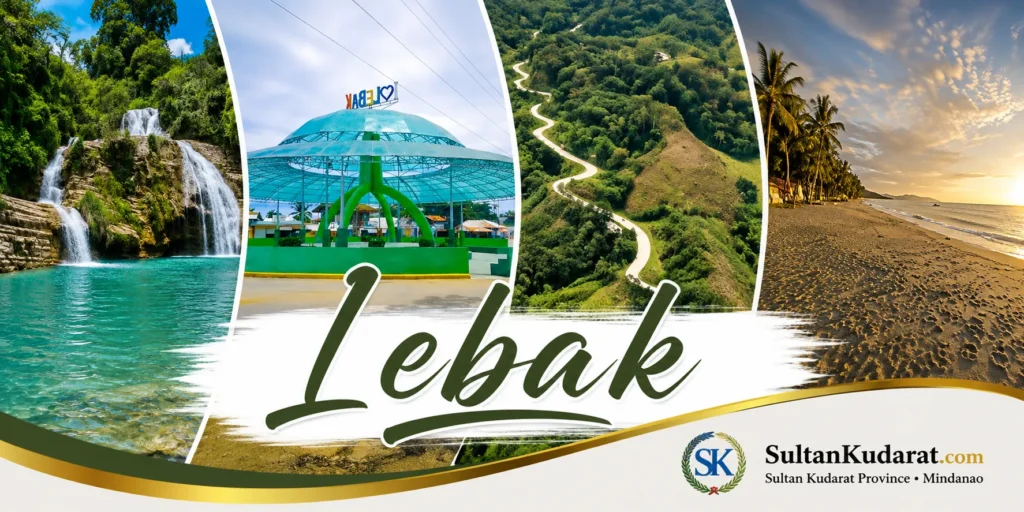
Lebak is a first-class coastal municipality in the province of Sultan Kudarat, within the SOCCSKSARGEN Region (Region XII) of the Philippines. Located along the province’s western coast, Lebak is known for its coastal communities, agricultural areas, fisheries, and diverse cultural heritage.
With a population of 93,312 according to the 2024 POPCEN, Lebak is one of the more populous municipalities in Sultan Kudarat. Agriculture, fisheries, commerce, and public services contribute to the local economy.
Quick Facts About Lebak
| Information | Details |
|---|---|
| Province | Sultan Kudarat |
| Region | SOCCSKSARGEN (Region XII) |
| Classification | First-Class Municipality |
| Independent Municipality Established | December 31, 1948 |
| Legal Basis | Executive Order No. 195, s. 1948 |
| Barangays | 27 |
| Population | 93,312 (2024 POPCEN) |
| ZIP Code | 9807 |
| Time Zone | Philippine Standard Time (UTC+8) |
| Common Languages | Hiligaynon, Cebuano, Maguindanaon, Teduray, Filipino and English |
Why Visit Lebak?
Lebak offers a combination of coastal scenery, waterfalls, caves, rivers, upland landscapes, agricultural communities, and mangrove environments. Because some destinations are still developing and may be located in remote barangays, visitors should confirm road conditions, guides, fees, operating hours, and weather conditions before traveling.
Visitors come to Lebak for its:
- Coastal scenery and beaches
- Mangrove environments
- Waterfalls and springs
- Caves and upland landscapes
- Agricultural communities
- Local markets and seafood
- Katunggan Coastal Eco Park
- Cultural and municipal celebrations
History of Lebak
According to the Municipal Government of Lebak’s historical account, the area’s earliest known inhabitants included Manobo communities. Teduray, Maguindanaon, Kalagan, Christian migrant, and other communities also contributed to the area’s settlement and cultural history.
On August 18, 1947, Executive Order No. 82 placed the Municipal District of Lebak under the Municipality of Kiamba and the Municipal District of Salaman under Dinaig, then part of the undivided Province of Cotabato.
On December 31, 1948, President Elpidio Quirino issued Executive Order No. 195, separating the municipal districts of Lebak and Salaman from Kiamba and Dinaig and organizing them as an independent municipality named Lebak. Its original seat of government was located at Sitio Kalamansig.
Through Executive Order No. 432, s. 1951, the municipal seat was later transferred from Kalamansig to Salaman. Kalamansig subsequently became a separate municipality.
Migration, agriculture, fisheries, trade, and the contributions of Indigenous, Muslim, and Christian communities shaped the municipality’s later development.
This sequence is supported by the Municipal Government of Lebak’s historical profile
Geography and Location
Lebak is located on the western side of Sultan Kudarat. It is a coastal municipality with low-lying coastal and agricultural areas as well as hills, forests, rivers, waterfalls, and upland communities.
The municipality is bordered by Kalamansig to the south, inland areas of Sultan Kudarat and neighboring territory to the east and north, and the Moro Gulf–Celebes Sea coastal area to the west.
Lebak is connected by road to Kalamansig and the interior portions of Sultan Kudarat. Travel to Isulan, Tacurong City, and other regional centers generally requires overland travel through mountainous or inland routes.
Barangays
Lebak is politically divided into 27 barangays:
Aurelio F. Freires Sr. (Poblacion II), Barurao, Barurao II, Basak, Bolebak, Bululawan, Capilan, Christiannuevo, Datu Karon, Kalamongog, Keytodac, Kinodalan, New Calinog, Nuling, Pansud, Pasandalan, Poblacion I, Poblacion III, Poloy-Poloy, Purikay, Ragandang, Salaman, Salangsang, Taguisa, Tibpuan, Tran, and Villamonte.
Climate
Lebak has a tropical climate with generally warm and humid conditions. Rainfall supports agriculture, forests, rivers, and mangrove environments, but heavy rain may also affect roads, river levels, coastal travel, and access to remote attractions.
Visitors should check current forecasts and local advisories, particularly when visiting waterfalls, caves, rivers, beaches, and upland barangays.
Economy
Lebak’s economy is supported by agriculture, fisheries, local commerce, transportation, construction, public services, and small enterprises. Tourism and hospitality are developing sectors, but they should not be presented as dominant industries without current economic statistics.
Major economic sectors include:
- Fisheries
- Agriculture
- Retail trade
- Tourism
- Hospitality
- Transportation
- Construction
- Government services
- Small and medium enterprises
- Agribusiness
Its commercial establishments and public market serve residents and visitors from surrounding communities.
Fisheries and Agriculture
Fishing and agriculture are important sources of livelihood in Lebak. The municipality’s coastal communities engage in municipal fishing and the local trade of fish and other marine products. The types and quantities of seafood caught vary according to the season, weather, fishing area, and fisheries regulations.
Farming is also an important part of the local economy. Agricultural products associated with the municipality include rice, corn, coconut, banana, vegetables, and other crops. Some households and agricultural enterprises also engage in poultry and livestock raising.
These activities support related businesses such as food trading, transportation, agricultural supplies, crop processing, and local market services. Current production figures and lists of major commodities should be confirmed with the Municipal Agriculture Office or the Philippine Statistics Authority.
Education
Lebak is served by public elementary and secondary schools located in its different barangays. Private education, Alternative Learning System programs, and technical-vocational training may also be available, but current institutions and courses should be verified directly.
Students seeking programs unavailable within the municipality may continue their studies in Isulan, Tacurong City, Koronadal City, General Santos City, or other education centers, depending on their chosen course and travel arrangements.
Healthcare
Primary healthcare is provided through the municipality’s health offices, Rural Health Unit, barangay health stations, and community health programs. Services may include basic consultations, maternal and child care, vaccination, health education, and disease-prevention programs.
The availability of emergency care, inpatient services, laboratory testing, dental services, and medicines should be confirmed directly with the appropriate facility. Patients requiring specialized treatment may need referral to hospitals in other municipalities or regional cities.
Business and Commerce
Lebak’s commercial establishments support residents, agricultural producers, fishing communities, government activity, and visitors.
Common types of businesses and services may include:
- Public market
- Grocery and general merchandise stores
- Hardware and agricultural supplies
- Restaurants and food establishments
- Pharmacies and basic services
- Accommodation establishments
Local businesses support both the municipality’s fishing industry and its growing tourism sector.
Tourist Attractions and Natural Areas
Lebak has developing nature-based destinations, but some are located in remote communities and may not have regular operating hours, trained guides, or complete visitor facilities. Travelers should contact the Municipal Tourism Office or barangay officials before visiting.
Katunggan Coastal Eco Park
Located in Barangay Taguisa, Katunggan Coastal Eco Park highlights Lebak’s mangrove and estuarine environment. Visitor facilities, activities, admission rules, and operating conditions should be confirmed before traveling.
Visitors must follow conservation regulations and avoid collecting plants, wildlife, shells, or other natural materials.
Waterfalls
Waterfalls reported in Lebak include Makin Falls in Barangay Villamonte, Tres Andanas Falls in New Calinog, and Ragandang Falls. Accessibility may depend on weather, road conditions, guides, and permission from local authorities or landowners.
Caves and Springs
Cave and spring environments have been reported in barangays such as Keytodac, Capilan, Bululawan, Salangsang, and Nuling. Visitors should never enter caves without permission, suitable safety equipment, and an experienced local guide.
Coastal Areas and Beaches
Coastal barangays offer beaches, mangrove environments, estuaries, and sunset views. Beach conditions, currents, weather, access rules, fees, and visitor facilities vary by location.
Rivers and Agricultural Landscapes
Lebak’s rivers and rural landscapes form an important part of the municipality’s environment and livelihoods. Activities such as boating, kayaking, fishing, or swimming should only be promoted at sites where they are officially permitted and considered safe.
Culture and Festivals
Lebak’s cultural identity reflects the histories and traditions of Manobo, Teduray, Maguindanaon, Hiligaynon, Cebuano, and other communities.
Araw ng Lebak and Layagan Festival
The municipality commemorates Araw ng Lebak through civic, cultural, community, and tourism-related activities. In 2025, the Municipal Government announced the 77th Araw ng Lebak and 3rd Layagan Festival.
Because festival names, numbering, schedules, and activities can change, visitors should check the latest announcement from the Municipal Government before planning a trip.
Kapeonan
Lebak also holds Kapeonan, a municipal celebration or community event associated with unity and local development. Official municipal records referenced the 6th Kapeonan in 2025.
Kapeonan and the Layagan Festival should be presented as separate named events unless an official current program states otherwise.
The municipal website lists the 77th Araw ng Lebak and 3rd Layagan Festival and separately documents the 6th Kapeonan. Official Lebak events and 2025 executive orders
Transportation
Lebak is accessible by road, but travel times and road conditions can vary because routes cross rural, coastal, and mountainous areas.
Transportation within and around the municipality may include tricycles, motorcycles, jeepneys, vans, buses, and private vehicles, depending on the route and current service availability.
Travelers going to or from Isulan, Tacurong City, Koronadal City, Kalamansig, or other destinations should confirm current terminals, departure times, transfer points, fares, and road conditions locally.
Government Services
The Municipal Government of Lebak provides essential public services through various local offices.
Municipal offices and public-safety services include:
- Municipal Hall
- Municipal Health Office
- Municipal Agriculture Office
- The municipal office responsible for agriculture and fisheries
- Civil Registry Office
- Business Permit and Licensing Office
- Municipal Tourism Office
- Philippine National Police
- Bureau of Fire Protection
- Disaster Risk Reduction and Management Office
These agencies support sustainable fisheries, agriculture, tourism, public safety, and local governance.
Safety and Responsible Travel
Some beaches, waterfalls, caves, rivers, and upland destinations in Lebak may have limited facilities or difficult access. Visitors should:
- Check weather and road conditions
- Coordinate with the Municipal Tourism Office or barangay officials
- Use a knowledgeable local guide for caves and remote waterfalls
- Avoid caves and rivers during or after heavy rain
- Verify currents and swimming conditions at beaches
- Obtain permission before entering private or Indigenous community land
- Follow mangrove and wildlife-protection rules
- Carry drinking water, appropriate footwear, and basic supplies
- Avoid leaving waste at natural sites
Mobile-phone coverage and emergency response times may differ in remote areas. Visitors should inform someone of their route and expected return time.
Investment Opportunities
Lebak may offer opportunities connected with agriculture, fisheries, food processing, storage, local trade, transportation, accommodation, and carefully planned nature-based tourism.
Prospective investors should evaluate market demand, road and utility access, land ownership, zoning, environmental restrictions, coastal hazards, waste management, permits, community consultation, and supply chains before committing funds.
Projects involving mangroves, shorelines, forests, rivers, aquaculture, or Indigenous communities may require additional environmental and legal approvals.
Frequently Asked Questions
Where is Lebak located?
Lebak is a coastal municipality on the western side of Sultan Kudarat in the SOCCSKSARGEN Region. Its coastline is associated with the Moro Gulf and the broader Celebes Sea area.
What is Lebak known for?
Lebak is known for its coastal and agricultural communities, developing nature-based attractions, waterfalls, caves, mangrove environments, Katunggan Coastal Eco Park, and local cultural celebrations.
What are the main industries in Lebak?
Agriculture, fisheries, local trade, transportation, public services, construction, and small enterprises support the municipal economy. Tourism and hospitality are developing sectors.
What languages are spoken in Lebak?
Hiligaynon, Cebuano, Maguindanaon, Teduray, Filipino, and English are among the languages spoken or understood in Lebak. Language use varies among barangays and communities.
Is Lebak good for tourism?
Lebak has potential for coastal, cultural, and nature-based tourism. However, some destinations are remote or still developing, so visitors should verify access, guides, weather, fees, and safety conditions before traveling.
Is Lebak good for investment?
Lebak may offer opportunities in agriculture, fisheries, food processing, trade, logistics, accommodation, and responsible tourism. Every proposal requires proper feasibility, legal, environmental, infrastructure, and market assessment.
Discover Lebak
Lebak combines coastal communities, agricultural landscapes, mangrove environments, rivers, waterfalls, caves, and culturally diverse barangays. Its developing destinations give visitors an opportunity to experience the natural and community life of western Sultan Kudarat.
Travelers should plan carefully, confirm current local conditions, respect private and culturally significant areas, and follow environmental and safety regulations. With responsible tourism and accurate preparation, Lebak can provide a meaningful look at the province’s coastal and upland environments.